
The Everything Else
Not Like Rock Stars at All

Mark Rushton’s Curator Mindset is a place where I talk in 2026 about my ongoing work as a recording artist and visual artist, tech things, and provide music recommendations. This is being released on Saturday, January 31, 2026.
Topics:
The Everything Else
TimePiece Update
SEP-IRA
The Magnetic Fields - ‘83: Foxx and I
The Everything Else
This past week, I’ve been reading and re-reading and highlighting things in the first chapter of Annette Vande Gorne’s “Treatise on Writing Acousmatic Music on Fixed Media”, which is in a book club I’ve joined. It’s a short book, about 86 pages.
For those who aren’t aware of “acousmatic music”, and that’s likely almost everybody in the world, I’ll let the word robot take over:
Acousmatic music is a form of electroacoustic music in which the listener hears sounds without seeing their source. In other words, the music is presented solely through loudspeakers, and the visual cause of the sound is intentionally hidden. This shifts attention toward the sound itself—its texture, timbre, spatial qualities, and transformation—rather than the performer or instrument.
The key ideas behind acousmatic music are:
Sound without a visible source: The core concept comes from the Greek akousma (“a thing heard”). You hear the sound, but you don’t see what produces it.
Roots in musique concrète (1940s): Pierre Schaeffer and Jérôme Peignot introduced the term acousmatique in 1955 to describe the listening mode used in musique concrète, where recorded sounds are manipulated and composed into new works.
Historic inspiration from Pythagoras: The idea echoes the teaching method attributed to Pythagoras, who lectured behind a screen so students would focus on listening.
Focus on sound qualities: Acousmatic works often emphasize timbre, spectrum, texture, and spatialization, rather than traditional musical elements like melody or harmony.
Usually fixed-media compositions: Many acousmatic pieces exist as recordings designed for multi-speaker playback rather than live performance.
Why does it matter?
By removing the visual context, acousmatic music invites a deeper, more imaginative mode of listening. Sounds become abstract objects, encouraging audiences to engage with them on their own terms.
Thank you, word robot. The human will take over...
The first chapter of this book explains what kind of music I produce. It gave terminology to my working and experimentation methods. For over 20 years, I just called this “ambient music” or “ambient electronic”. And it is. But now I understand how this related to the composition side. I don’t typically compose in formal arrangements, in keys, or with notes. It’s what I call “The Everything Else”.
Looking back on grade school band, I realize it was the “the everything else” I was really interested in - rather than the keys and notes. That’s why I’ve kept my interest in making music as an adult.
TimePiece Update
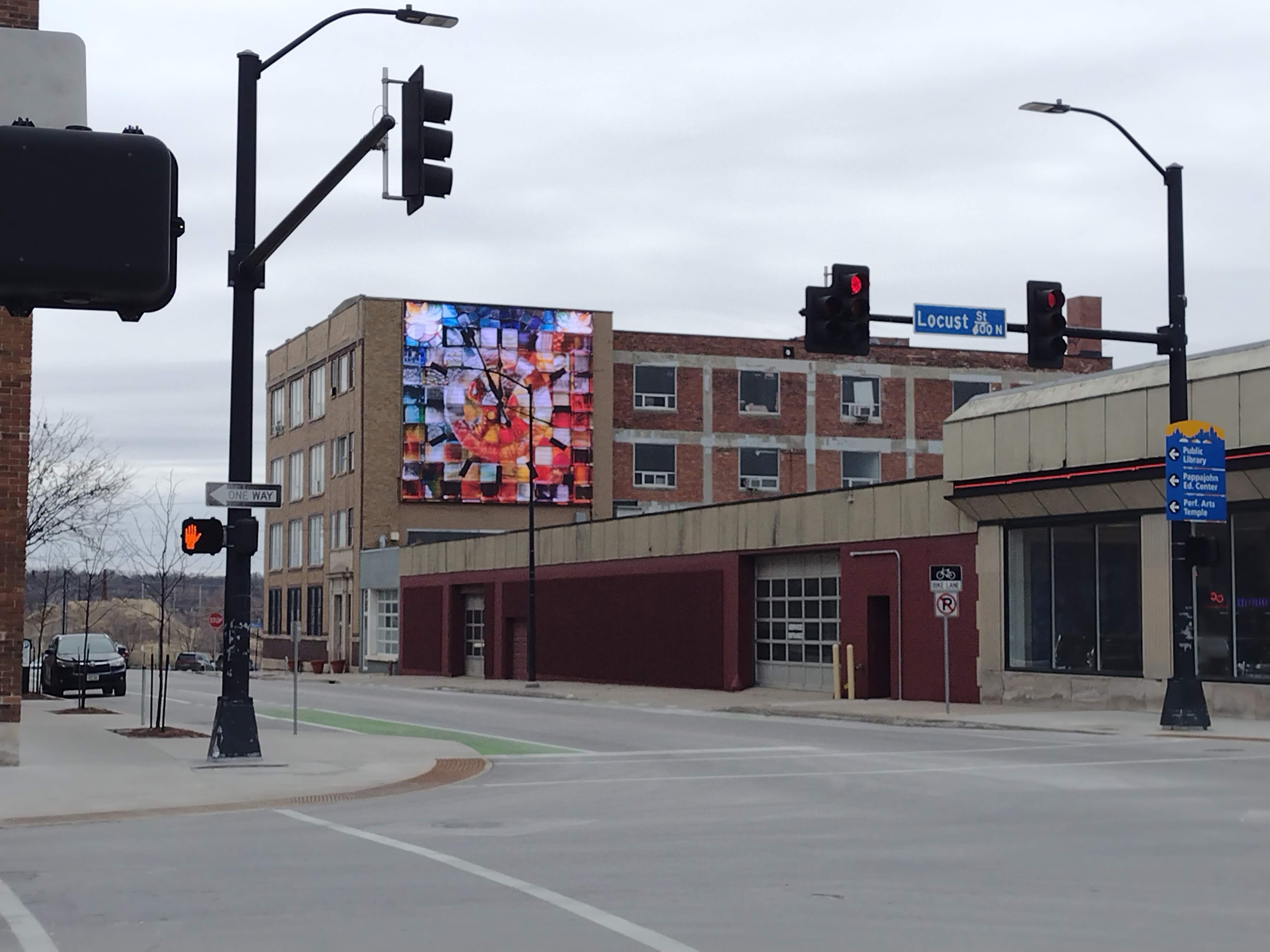
As I keep saying, the 24 music tracks for the TimePiece soundtrack are completed, edited, titled, and sequenced. I’ve been listening to them. They’re ready. I’ll put them on Bandcamp soon, so follow me there if you want to get notified when the album is available. I’ll get them scheduled for distribution. Maybe a March 2nd release date? That’s a Monday. It’ll be a month out, so that should work. I don’t really care as much about streaming anymore. Should I make a CD on Kunaki? I might...
I think the album flows beautifully. All the tracks are three minutes long. It’s a variety of styles, but as I’ve said previously there’s an electronic thread going through each track. It has continuity.
The “FM Radio” aspect of this project that I’ve mentioned previously is still likely to happen. I bought a 100mw mono FM transmitter that is Part 15 FCC Compliant, meaning I don’t need a license for broadcast, and I hope to play the music 24/7 that way. The range should be a block or two of my studio space in downtown Des Moines, which is adjacent to where the TimePiece art installation is located. But I need time to figure out the “radio station” software. I haven’t tested the transmitter yet. I’d like to get the music “out the door” first. And anyway, it’s still winter here, so nobody will be outside and watching the TimePiece clock for long.
SEP-IRA
The other thing I’ve been dealing with is “tax season”. My CPA sent out his yearly “checklist” - alerts for his S-Corp and 1040 clients, of which I am both.
In his letter for S-Corps, he mentioned that up to 25% of gross wages could go into a SEP-IRA. Because I’m a single member entity, that’s all me. There’s a bit of a tax break, although modeling it proved difficult. The SEP-IRA contribution would be all “post-tax” money, anyway. I turn 59 1/2 in 2026, so there’s no downside.
To start the SEP, I had to fill out an “adoption agreement” with my investment company. The “adoption agreement” is based on the IRS form 5305, and both documents make my head spin. I had to use a word robot to figure it out, but I think I figured it out. The funny thing is that I had to either mail or fax it into the investment company. Faxing! No online forms for SEPs. I asked the word robot and there’s no explicit regulatory requirement - it’s simply a custodian requirement.
I worked for this investment company in the early to mid 1990s. SEPs were exotic to me back then, and a dedicated team handled those. They still seem kinda exotic, but that’s just the application. SEPs aren’t for everybody, but it looked like the right thing for my situation. Any time you can qualify for a tax break without spending any money, that’s a good benefit.
The Magnetic Fields - ‘83: Foxx and I
I haven’t heard much new music lately. I should dig into the new Kim Gordon album. There’s lots more to explore via Qobuz Discover New Released, which are “handpicked” - if you have the time. That’s how I found Galina Juritz.
‘83: Foxx and I is about as respectful of a tribute as anybody could make.
I thought I read once where John Foxx was asked about the song and he said he was “flattered” by it. That’s perfect.