
Deep Freeze Abatement
Do Not Rejoice Too Soon!

Mark Rushton’s Abundant Spare Time is an email where I talk about my ongoing work as a recording artist and visual artist. This is being released on Saturday, December 20, 2025

Topics:
Deep Freeze Abatement
Jordi Savall · Joseph Haydn · Le Concert des Nations · La Capella Nacional de Catalunya · Gottfried van Swieten: Die Jahreszeiten, Hob. XXI:3, Der Frühling: II. Komm, holder Lenz! (Chor des Landvolk)
Deep Freeze Abatement
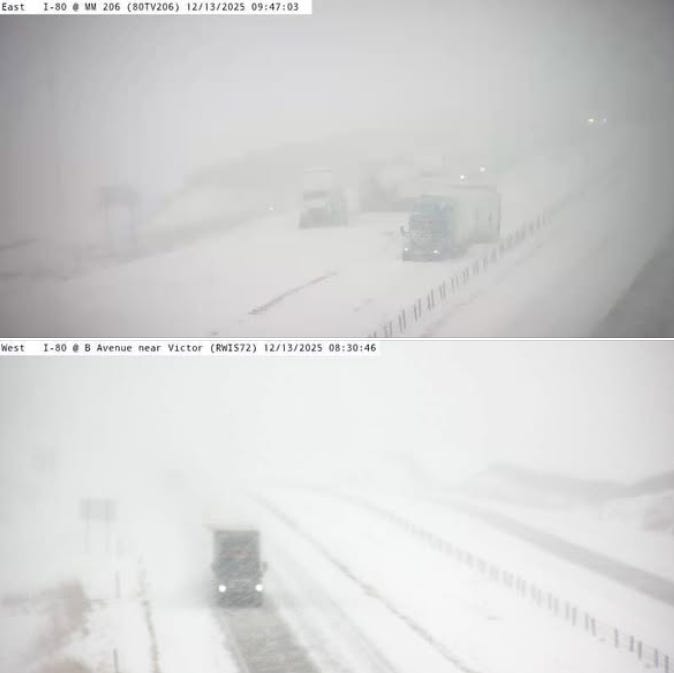
The past three weeks have sucked. Early snowstorms. Deep freezes. Never-ending winds. Slight warmups. Then more snowstorms, deep freezes, never-ending winds, etc. I think we’ve had three waves of this nonsense.
It’s supposed to end and be nice between now and New Year’s. Maybe.
But it’s zapped me.
I have six more tracks to complete on the TimePiece art clock soundtrack project.
I bought a $50 laptop from eBay that will arrive soon. I’ll put Linux Mint on it. Then download and figure out the Rivendell radio station automation software that will flow into the 100mw FM transmitter I have yet to test.
Won’t it be funny if everything actually works?
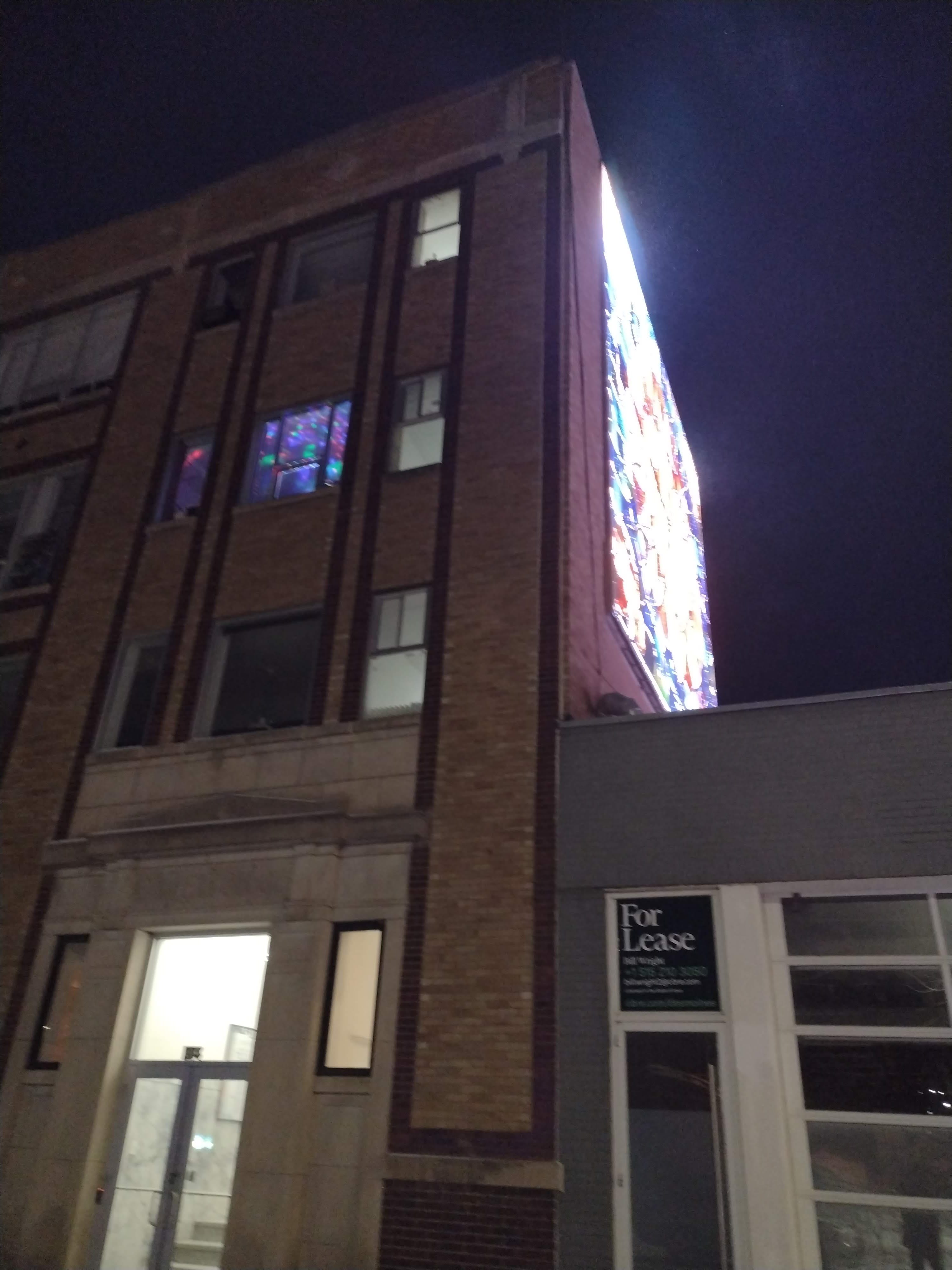
I know it’s a little crazy: an audio soundtrack for a 800 sq ft LED panel “clock” by another artist. Nobody asked for this!
Then the cherry on top is broadcasting it on FM - using a transmitter and antenna that might only reach a few hundred feet. Completely bonkers!
Well, the way I see it now, having an “art studio” isn’t necessarily about producing artworks for selling.
Nothing wrong with that, but at this stage of my life “art” is about something else. I can’t really explain it, but I guess I’ve kinda explained it.
Jordi Savall · Joseph Haydn · Le Concert des Nations · La Capella Nacional de Catalunya · Gottfried van Swieten: Die Jahreszeiten, Hob. XXI:3, Der Frühling: II. Komm, holder Lenz! (Chor des Landvolk)
Heard this on Qobuz a couple of weeks ago. I feel like I’ve gone through winter already! It’s just been nasty here in Iowa.
If you’re not familiar with this music, read below while listening.
Take it away, word robots:
Q: Tell me about Haydn’s Die Jahreszeiten, Hob. XXI:3, Der Frühling: II. Komm, holder Lenz! (Chor des Landvolk)
Die Jahreszeiten is a secular oratorio composed by Franz Joseph Haydn in 1801, shortly after the immense success of his earlier oratorio Die Schöpfung (The Creation). It is based on the poem The Seasons by Scottish poet James Thomson, with a German libretto adapted by Gottfried van Swieten. The work depicts rural life through the cycle of the four seasons, featuring three soloists representing country folk (Simon: bass; Lukas: tenor; Hanne: soprano), a large chorus, and a late-Classical orchestra. It premiered in Vienna and is celebrated for its vivid tone painting, lively choruses, and blend of pastoral joy with dramatic natural elements.
The oratorio is divided into four parts: Spring (Der Frühling), Summer, Autumn, and Winter. Der Frühling (Spring): No. 2 – “Komm, holder Lenz!” (Chorus of the Country People)
This joyful chorus is the second number in the Spring section and one of the most beloved moments in the entire work. It follows an introductory orchestral depiction of winter’s retreat and a recitative where the soloists describe the transition to spring.
The piece is in a bright, pastoral style: Allegretto in 6/8 time, with lilting rhythms, major key emphasis, and musette-like drone effects that evoke the countryside. It is scored for full chorus and orchestra, lasting around 3-4 minutes in performance.
The words capture anticipation and cautious optimism about spring’s arrival, reflecting the renewal of nature after winter. Haydn’s music is exuberant and uplifting, with the chorus building in energy to celebrate the season’s promise.
This chorus sets a radiant tone for the Spring section and exemplifies Haydn’s masterful ability to paint natural scenes through music. It’s frequently performed independently and remains a highlight of the oratorio’s enduring popularity.
Q: Who is Jordi Savall?
Jordi Savall (born August 1, 1941, in Igualada, Catalonia, Spain) is a renowned Spanish-Catalan conductor, composer, and virtuoso player of the viola da gamba (viol). He is widely regarded as one of the most influential figures in the revival of early music since the 1970s, credited with popularizing the viol family of instruments and bringing forgotten historical repertoires to modern audiences through meticulous research and vibrant performances.
In collaboration with his late wife, soprano Montserrat Figueras (1942–2011), he founded three key ensembles:
Hespèrion XXI (originally Hespèrion XX in 1974) – focused on early music.
La Capella Reial de Catalunya (1987) – a vocal ensemble.
Le Concert des Nations (1989) – a period-instrument orchestra for Baroque and Classical works.
He also established his own record label, Alia Vox, in 1998, releasing over 230 recordings that have earned numerous awards, including Grammys, International Classical Music Awards, and Midem Classical Awards.
Q: Did he recently release a version of Haydn’s The Seasons?
Yes, Jordi Savall recently released a recording of Haydn’s Die Jahreszeiten (The Seasons).
In 2025, he released a new historically informed performance of the oratorio on his label Alia Vox (catalog AVSA9964), as a 2-CD/SACD hybrid set. Conducted by Savall with Le Concert des Nations (period-instrument orchestra) and La Capella Nacional de Catalunya (chorus), it features soloists Lina Johnson (soprano/Hanne), Tilman Lichdi (tenor/Lukas), and Matthias Winckhler (bass-baritone/Simon).
This recording follows live performances during a 2024 European tour (including Barcelona, Paris, Madrid, and Dresden) and academy projects with young musicians. It emphasizes vivid tone painting, transparency, and emotional depth on period instruments, earning praise for its freshness and luminosity in reviews from sources like Scherzo, Olyrix, and ClassiqueNews.
The album is available on platforms like Qobuz, Amazon, and the Alia Vox website.
This is Savall’s second major Haydn oratorio recording after The Creation (released around 2021–2022).